HUD Technology and Future Tech Game: Elevating Visual Design with Futuristic Interface Elements
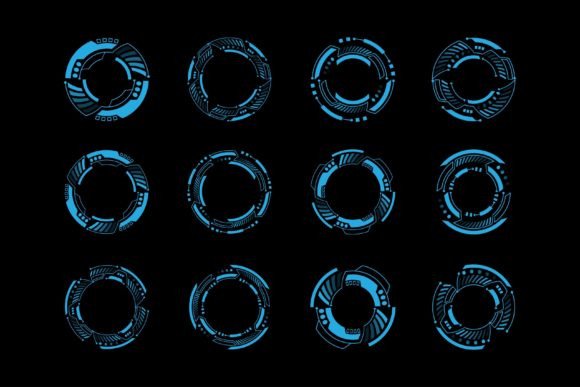
When we talk about HUD technology and future tech game aesthetics, we are usually referring to the visual language of science fiction interfaces. These are the glowing data streams, circular targeting reticles, and complex geometric overlays seen in blockbuster movies and high-end video games. However, for designers, content creators, and marketers, these elements serve a much more practical purpose than just entertainment. They act as powerful visual shorthand for innovation, precision, and advanced capability. Integrating futuristic frames and user interface vectors into your projects allows you to instantly communicate a sense of modernity and technical sophistication without having to draw complex geometry from scratch.
This specific design resource bridges the gap between conceptual sci-fi art and usable graphic assets. By providing both vector and JPG formats, it acknowledges that creative workflows vary significantly. A social media manager might need a quick JPG overlay for an Instagram story, while a brand identity designer requires scalable vectors in Adobe Illustrator to create large-format signage or detailed packaging. Understanding how to leverage these assets in real-world scenarios is what separates generic design from compelling visual storytelling.
Practical Applications in Digital Content Creation
The most immediate application for HUD technology and future tech game elements is in the realm of digital content. Streamers and video producers constantly seek ways to retain viewer attention through dynamic visuals. A static border on a webcam feed can feel dated, but a subtle, animated-ready HUD frame suggests professionalism and high production value. Because this package includes vector files, creators can adjust the stroke weight and color palette to match their specific channel branding before exporting. This ensures the tech aesthetic supports the brand rather than overpowering it.
Beyond streaming, consider the needs of tech bloggers and reviewers. When writing about cybersecurity, artificial intelligence, or new hardware, standard stock photography often feels disconnected from the subject matter. Using futuristic UI elements as background textures or section dividers creates a cohesive thematic thread throughout the article. It visually reinforces the topic of "future tech" without relying on cliché images of people typing on laptops. For educators creating course materials on STEM subjects, these frames can organize information hierarchically, making dense data feel more approachable and structured like a dashboard.
Enhancing Print Media and Physical Decor
While digital use is common, the inclusion of print-ready vector formats opens up significant opportunities for physical media. Event organizers hosting hackathons, gaming tournaments, or tech conferences need environmental graphics that set the mood. Large-format banners, stage backdrops, and wayfinding signage benefit immensely from crisp, scalable HUD elements. Since vectors do not lose quality when resized, a designer can take a small interface element and stretch it across a ten-foot banner without pixelation. This flexibility is crucial for maintaining professional standards in physical spaces where viewers will be inspecting details up close.
Merchandise design is another area where these assets shine. Apparel, stickers, and posters targeting niche communities often utilize cyberpunk or techno-futurist aesthetics. Having editable source files means a freelancer can customize the text within the HUD frames to say "Team Alpha," "Level 99," or a specific company slogan. This turns a generic asset into bespoke merchandise. The ability to modify line colors also allows for cost-effective printing; a designer can simplify a multi-color neon HUD into a single-color screen print design suitable for t-shirts while retaining the intricate detail of the original vector.
Commercial Branding and Corporate Identity
Businesses operating in cutting-edge sectors often struggle to visualize their abstract services. How do you represent cloud computing architecture or quantum encryption visually? HUD technology and future tech game styles provide a metaphorical framework. Marketing agencies can use these vector elements to build infographics that explain complex processes. Instead of boring flowcharts, data flows can be represented through stylized conduits and nodes. This makes annual reports, pitch decks, and whitepapers significantly more engaging for stakeholders who may otherwise glaze over during technical presentations.
For app developers and software companies, these assets can serve as inspiration or direct components for actual user interfaces. While a full HUD might be too distracting for a banking app, subtle nods to this aesthetic—such as thin precision lines, monospaced typography accents, or translucent panels—can make a fintech product feel secure and advanced. The vector format is essential here because UI design requires exact alignment and scalability across different device screens. Being able to open the file in Illustrator and extract specific icons or borders saves hours of drafting time during the prototyping phase.
Educational and Instructional Design Scenarios
Educators and trainers are increasingly adopting gamification strategies to boost engagement. HUD elements are native to gaming culture, so incorporating them into training modules triggers a familiar psychological response associated with progress and achievement. A corporate compliance training module doesn't have to look like a spreadsheet. By framing quiz results or progress trackers within futuristic UI elements, the experience feels less like a chore and more like an interactive challenge. This is particularly effective for adult learners aged 20–50 who grew up with video games and associate this visual style with active participation rather than passive consumption.
Furthermore, simulation-based learning relies heavily on authentic-looking interfaces. Whether training pilots, medical technicians, or system operators, the visual fidelity of the training environment impacts immersion. High-quality vector HUDs allow instructional designers to build realistic mockups without commissioning expensive custom 3D renders. They can layer these 2D elements over video backgrounds or 3D scenes to create composite training materials that look polished and authoritative.
Technical Considerations Before Implementation
Before downloading and integrating these assets, users must understand the technical requirements to avoid workflow bottlenecks. The files are compressed into a single ZIP archive, which is standard for protecting vector integrity during transfer. You will need extraction software like WinZIP, WinRAR, or the native extraction tools built into Windows and macOS. Simply double-clicking the ZIP file usually works on modern systems, but having dedicated software ensures no file paths are corrupted during unpacking.
Vector editing proficiency is a key consideration. While JPGs are universally compatible, the true value of this package lies in the AI (Adobe Illustrator) files. If you lack access to Illustrator or similar software like Affinity Designer or CorelDRAW, you will be limited to the raster versions. Users should verify their software compatibility before purchase. Additionally, understanding layers is vital. Complex HUD designs often contain dozens of grouped paths. Knowing how to ungroup, isolate, and recolor specific elements efficiently prevents frustration. Beginners might find the complexity overwhelming, so assessing your skill level honestly is important.
Licensing is another critical factor for commercial users. Just because a file is editable does not mean it is free for all uses. Always review the specific license agreement included in the ZIP file. Some licenses allow for unlimited commercial end-products, while others restrict usage to personal projects or require attribution. For entrepreneurs selling templates or merchandise, ensuring you have the appropriate commercial rights protects your business from legal issues down the line. Never assume that purchasing a download grants trademark ownership of the design itself.
Design Balance and Accessibility
Finally, effective use of HUD technology and future tech game elements requires restraint. The aesthetic is inherently busy and high-contrast. In professional or educational contexts, readability must always take precedence over style. A beautiful futuristic frame is useless if the text inside it is illegible against a cluttered background. Designers should use these elements as containers or accents, leaving ample negative space for core content. Testing contrast ratios is especially important for web accessibility; neon colors on dark backgrounds can cause eye strain or fail WCAG standards if not managed carefully.
Contextual relevance also matters. A HUD overlay fits perfectly for a cybersecurity firm or an esports team but might feel alienating for a wellness brand or a traditional law practice. Always ask whether the futuristic aesthetic aligns with the audience's expectations and the message's tone. When used thoughtfully, these vector assets transform ordinary layouts into immersive experiences. When used indiscriminately, they become visual noise. The goal is to enhance communication, not just decorate a page. By approaching these tools with a strategic mindset, creators can harness the power of future tech visuals to produce work that is both aesthetically striking and functionally superior.