Enhancing Early Literacy with the Phonics Alphabet Punch Hole Game PDF
For parents and educators seeking innovative ways to teach phonics and letter recognition, the Phonics Alphabet Punch Hole Game PDF offers a hands-on, engaging solution. Designed with young learners in mind, this interactive tool combines tactile learning with visual and auditory stimulation to reinforce foundational literacy skills.
How the Phonics Punch Game Works
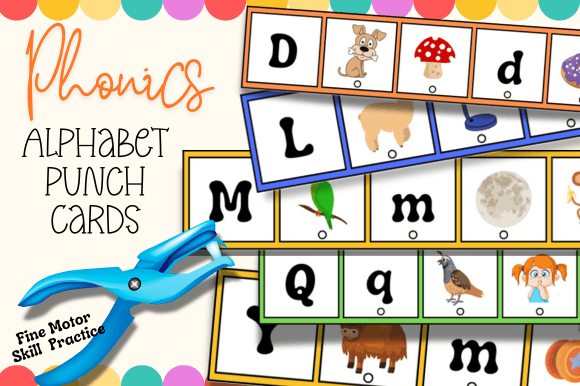
The Phonics Punch Game PDF is structured around simple yet effective gameplay. Each page features a letter of the alphabet along with corresponding images that represent the letter's sound. Children are tasked with identifying the correct image that matches the target letter. Once they make the correct match, they use a hole punch to create a mark on the designated spot. This physical action not only confirms their success but also adds a sensory element that enhances memory retention.
For example, a page featuring the letter "B" may show images of a ball, a cat, and a banana. The child must recognize that "ball" starts with the /b/ sound and punch the corresponding circle next to that image. This process reinforces phonemic awareness and strengthens letter-sound associations.
Why Tactile Learning Matters in Early Education
Children learn best when they can interact with their environment. The Phonics Alphabet Punch Hole Game PDF taps into this natural inclination by incorporating a tactile component. Punching holes in paper provides immediate feedback and a satisfying physical action that keeps kids engaged. This sensory experience helps reinforce learning and makes abstract concepts more concrete.
- Encourages fine motor development through the use of a hole punch
- Reinforces correct responses through a physical action
- Increases attention span and focus during learning sessions
Design Features That Support Learning
One of the standout features of the Phonics Punch Game PDF is its thoughtful design. Each page is filled with vibrant illustrations that capture a child's attention and make the learning experience enjoyable. The instructions are clear and concise, allowing even early readers to navigate the game with minimal assistance.
Additionally, the PDF format makes it easy for educators and parents to print and reuse the pages as needed. Laminating the sheets or placing them in protective sleeves allows for repeated use, making this a cost-effective and environmentally friendly option for early literacy instruction.
Perfect for Homeschooling, Classrooms, and Learning Centers
Whether used in a classroom, homeschool setting, or after-school program, the Phonics Alphabet Punch Hole Game PDF adapts easily to various learning environments. Teachers can integrate it into literacy centers or use it as a one-on-one intervention tool. Parents can use it during structured learning time or as a fun activity during breaks.
- Supports differentiated instruction for varied learning levels
- Can be used independently or with adult guidance
- Offers a break from screen-based learning while remaining interactive
Supporting Phonemic Awareness and Reading Readiness
At its core, the Phonics Alphabet Punch Hole Game PDF is more than just a matching activity—it's a tool for building the foundation of reading. By focusing on phonics sounds and letter recognition, children begin to understand how letters function within words. This awareness is crucial for developing decoding skills and early reading fluency.
For instance, a child who learns that "D" makes the /d/ sound through repeated exposure in the game will more easily recognize the letter in the word "dog" or "duck." This transfer of knowledge from isolated letter practice to real-world reading is a key benefit of the game.
Customization and Adaptability for Diverse Learners
One of the greatest strengths of the Phonics Punch Game PDF is its adaptability. Educators and parents can modify the game to suit different learning styles and developmental stages. For younger children, the game can focus solely on letter recognition. For older preschoolers or kindergarteners, it can be extended to include blending sounds or identifying beginning, middle, and ending sounds in words.
Additionally, the game can be adapted for children with special needs by incorporating visual aids, verbal prompts, or alternative marking tools like stickers or stamps instead of a hole punch. This flexibility ensures that all children can benefit from the engaging format of the game.
Integrating the Phonics Punch Game into Daily Routines
Consistency is key in early literacy development. The Phonics Alphabet Punch Hole Game PDF can easily be incorporated into daily routines, whether as a morning warm-up, a literacy center activity, or a quiet time task. Because the game is self-paced, children can work independently once they understand the format, freeing up time for parents or educators to focus on other learners.
For best results, it's recommended to introduce a few letters at a time and revisit them regularly to reinforce retention. Over time, children can work through the entire alphabet, tracking their progress by the number of punched holes on each page.
What Parents and Educators Are Saying
Many educators and parents have praised the Phonics Punch Game PDF for its simplicity and effectiveness. Teachers report that students are eager to play and often ask to repeat the activity. Parents appreciate how the game makes learning feel like play, reducing resistance to structured learning time.
One parent shared, "My daughter used to struggle with letter sounds, but since we started using the Phonics Punch Game, she's made so much progress. She loves the act of punching the holes and feels proud when she gets it right." Another teacher noted, "This game is a hit during literacy centers. It's easy to set up and keeps kids engaged for longer periods than traditional worksheets."
Getting Started with the Phonics Alphabet Punch Hole Game PDF
Accessing the Phonics Alphabet Punch Hole Game PDF is simple. It can be downloaded online and printed for immediate use. All that's needed is a printer, paper (or laminated sheets), and a hole punch. For added durability, consider placing printed pages in sheet protectors and using a dry-erase marker for marking before punching.
When introducing the game to a child for the first time, it's helpful to model the process. Start with a few familiar letters and gradually introduce new ones as confidence grows. Celebrate progress with verbal praise or small rewards to keep motivation high.